




Category: Press Release
PRODUCT RELEASE: Cortec® Releases New Oil Additive to Prevent Rust in Gearboxes
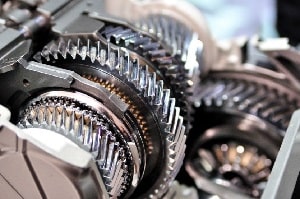 Cortec® is pleased to introduce M-535 HV, a high viscosity version of its corrosion inhibitor additive for ashless lubricating systems. Prior to this development, asset owners were limited to using M- 535 for protection of low viscosity lubrication systems. Now, M-535 HV gives preservation managers the option of applying the same corrosion inhibitor package to an even broader range of critical equipment.
Importance of Rust Prevention During Layup
Layup is a risky time for gearboxes, turbines, compressors, and other equipment with lubricating systems. Without normal operating frequency, equipment is more vulnerable to internal rust formation. Trapped moisture has ample time to condense on metal surfaces and eat away at the system via corrosion, leading to a variety of problems when the equipment starts back up. Worst of all, these complications can include equipment failure and shortened service life, which only add to company losses.
Benefits of Rust Preventative Oil Additives
Adding a corrosion inhibiting oil additive during layup can go a long way toward protecting the metal parts of a lubricating system. Standard M-535 is one such additive designed for use in ashless applications that use petroleum and synthetic lubricants such as naphthenic, paraffinic, and PAO. It protects in both the contact and vapor phase, meaning corrosion inhibitors are active on surfaces in direct contact with the treated oil and diffuse throughout the head space above the oil, where condensation can especially be a problem. This multiphase action allows M-535 to be applied either as an oil additive or fogged into a system that has been drained. M-535 protects at a low dose for greater economy. Another advantage is that it can sometimes be left in the system for intermittent operation during the layup period.
Different Viscosities for Different Applications
M-535 has a base oil viscosity of ISO 46, making it suitable for low viscosity systems such as turbines and compressors. With M-535 HV, the chemistry is identical, but the base oil viscosity is higher, bringing M-535 HV to ISO 320 for compatibility with high viscosity lubricant systems such as those in gearboxes. Since gearboxes are found everywhere in the industrial environment, preservation specialists have many opportunities to use a high viscosity rust preventative additive for temporary shutdown or layup of power plants, offshore platforms, paper manufacturing plants, or industrial facilities.
Extending Protection to High Viscosity Ashless Systems
M-535 HV opens up new possibilities for corrosion protection of ashless oil systems. Rust prevention can make a critical difference to the success of any industrial layup plan, and M-535 HV makes sure that protection extends to high viscosity ashless lubricating oil systems. Contact Cortec® to learn more about how to prevent rust in gearboxes and other high viscosity lubricant systems: https://www.cortecvci.com/contact-us/
Keywords: How to prevent rust in gearbox, high viscosity lubricating oil, new oil additive, Cortec, rust prevention during layup, rust preventative oil additives, rust prevention for turbines and compressors, rust preventative additives for layup, corrosion inhibitor, causes of equipment failure
Need a High-Resolution Photo? Please Visit: www.cortecadvertising.com
For a PDF version please click here.
PRESS RELEASE: VpCI®-391 Removable Protective Coating: An Enduring Industry Favorite
 Some products get used over and over because they work so well and are easy to use. That is the case with VpCI®– 391, which continues to be a popular removable coating for temporary protection of metal components of all kinds. No matter the industry locale—whether on the offshore platform, back at the manufacturing plant, in the warehouse, or out in the field—chances are that a good candidate for VpCI®-391 is close at hand!
Inconspicuous Corrosion Protection
VpCI®-391 is a water-based removable coating that dries to a thin, inconspicuous non-tacky film. It offers corrosion protection in harsh conditions and can be sprayed, brushed, or dipped right over painted or unpainted metal. Its low VOC (0.4 lbs/gal [48 g/L]) is a great advantage both for users and the environment. As a versatile, effective, and easy to use coating, VpCI®-391 has been applied around the world and in practically every phase of the industrial cycle: manufacturing, shipping, storage, and even operation. Here is a closer look at how it can be used.
Transit Coating for Equipment Manufacturers
VpCI®-391 is a great choice for manufacturers of equipment that needs to get to the customer in like-new condition but is not well-suited to packaging due to shape and size. Often, an easy solution is to spray VpCI®-391 right over the component, machine, or service vehicle as an alternative to cumbersome tarps and shrink films. One firetruck manufacturer has happily adopted this method as a finishing touch to new fire engines before shipping them off. Another manufacturer sprays VpCI®-391 on sensitive areas (e.g., bolt heads, wheel rims, and metal tubing) of new construction equipment. In addition to providing protection before, during, and after transit, this coating offers much better aesthetics than the previous oily product that collected bugs and dust.
Protection on Standby for Layup and Warehousing Teams
Other end users focus on VpCI®-391 as a means of preservation for spare parts or items that will not be used for a while but need to be ready to return to service. An easily removable coating can meet this need on valves, heavy equipment, top drives, and even structural steel. VpCI®-391 is a great option because it can be coated right over previously painted handrails and equipment without minimizing usability. For example, one Pacific military base has applied VpCI®-391 to vulnerable areas such as wheel wells and firewall rims of airfield damage repair (ADR) vehicles. By using VpCI®-391 and other inobtrusive preservation materials, the ADR vehicles can be ready to drive away at a moment’s notice. Another good example is the protection of pipe segment weld-ends with VpCI®-391 during their time at a laydown yard or staging site.
A Removable Coating Left on by Operators
While VpCI®-391 is primarily intended for temporary use, as during shipping or storage, some industries leave it on for everyday operation. One company responsible for loading/unloading river barges with corrosive commodities such as fertilizer or deicing salts has implemented VpCI®-391 into its seasonal maintenance practice, recoating the front-end loaders annually with VpCI®-391 for at least a decade. By spraying VpCI®-391 over as much of the metal surfac -top, bottom, and sides—as they can reach, they have noticed a much better equipment lifespan.
Get to Know an Industry Favorite
Whichever part of industry you find yourself in, odds are high that a metal part, structure, or machine nearby needs a simple, practical way to hold back corrosion without extra packaging materials or significant change to the surface appearance. If this is the case, it may be time to get to know VpCI®-391 as an industry favorite yourself. Contact Cortec® today to learn more about using VpCI®-391 as a protective removable coating: https://www.corteccoatings.com/contact-us-2/
Keywords: removable coating, protective coating, paint for metal, best paints for metal, metal protection, water based coating, corrosion inhibitors, rust prevention, warehousing, Cortec
Need a High-Resolution Photo? Please Visit: www.cortecadvertising.com
For a PDF version please click here.
PRESS RELEASE: Cortec’s ‘Green’ Innovation for Offshore and Marine Industries: Multipurpose, Biobased Grease with Superior Corrosion Protection!
PRESS RELEASE: The Power of MCI® Concrete Admixtures as Green Building Materials

Can something as small as one pint of admixture per cubic yard (0.6 L/m³) of concrete have much of an impact on construction when it comes to sustainability? In reality, a seemingly small decision like the choice of an admixture can have far reaching consequences on a structure’s environmental impact. MCI® admixtures, in particular, make an ideal option where sustainability is concerned.
The Quest for Sustainability
The quest for green buildings and sustainable construction is on the rise as society thinks more and more about the impact of human activities on the environment. This attitude is reflected in the American Concrete Institute’s “ACI 130R-19: Report on the Role of Materials in Sustainable Concrete Construction,” published in 2019. This report discusses how the choice of construction materials can affect sustainability in several respects such as carbon footprint, materials efficiency, construction practices, and service life. Among other topics, an entire chapter is devoted to chemical admixtures and additives. It is here the report underscores the huge potential ROI of concrete admixtures by stating, “Chemical admixtures in and of themselves contribute very little to the total environmental burden of concrete. This addition is dwarfed by the net reduction in the environmental impacts of concrete that use of chemical admixtures can provide.” How can such a seemingly small decision reduce the overall environmental impact of the concrete? The answer is by extending the service life of the concrete structure. Theoretically, this reduces the amount of concrete that will be needed for repair or replacement, which in turn reduces the carbon emissions of concrete production (a significant contributor to greenhouse gas) throughout the structure’s life cycle.
How MCI® Admixtures Extend Service Life
How, then, do MCI® admixtures extend the service life of a concrete structure? The means is corrosion inhibition. Corrosion of embedded reinforcement is one of the primary causes of concrete deterioration leading to repair or replacement. It is often caused by high chloride exposure in coastal environments or regions with severe winters where deicing salts are needed. It can also be the result of concrete carbonation, caused by the gradual loss of naturally protective high alkalinity levels after decades of exposure to the atmosphere. Corrosion products can cause the reinforcing metal to expand to several times its original size, pushing on the overlying concrete and making it crack or spall, which creates pathways for more corrosives to enter and continue the vicious cycle.
MCI® admixtures dosed into the ready mix at the time of construction fight the corrosion process by forming a molecular protective layer on the rebar. This interrupts the natural corrosion reaction, delaying time to corrosion and reducing corrosion rates once started. ASTM G109 testing has shown MCI® to reduce corrosion rates by five to 13 times when compared to untreated samples. This corrosion reduction can have powerful effects on a structure’s service life and delay time to the first needed repair by the simple addition of a concrete admixture at a fraction of the entire structure’s cost.
Other Sustainability Benefits of MCI® Admixtures
Another sustainability advantage is that several MCI® admixtures include biobased content. MCI®-2005 is a USDA Certified Biobased Product that contains 67% USDA certified biobased content. In addition, MCI®-2005 NS contains 27% biobased content, MCI®-2005 AL contains 20% biobased content, and MCI®-2006 NS contains 25% biobased content. This feature can help green building projects earn credits toward LEED certification (a nationally accepted US benchmark and globally recognized standard in green building) in the “Sourcing of Raw Materials” MR Credit category. By extending service life, MCI® admixtures can also contribute to the “Building Life-Cycle Impact Reduction” MR Credit category for those who use a life-cycle assessment (LCA) to demonstrate the potential reduction in CO2 emissions.
Side Benefits of MCI®
Sustainability and life cycle aside, MCI® admixtures offer other practical benefits. Unlike calcium nitrite corrosion inhibitors, they do not accelerate set time, they are dosed independently of expected chloride threshold, and they have minimal impact on physical properties—often showing a marked advantage in workability and ease of finishing compared to CNI. Use of MCI® admixtures has also been known to offer significant cost savings compared with other strategies of corrosion mitigation such as epoxy coated rebar.
Small Addition, Big Impact
Ultimately, a small dose of corrosion inhibiting admixture can have a big impact on the sustainability of a structure. It is an excellent way for those engaged in green building to conserve natural resources with the goal of reducing carbon dioxide emissions from the concrete manufacturing process. The even greater benefit of making a structure last longer is that it increases sustainability all around—both for the environment and for the pocketbook of the building owner. Contact Cortec® for further help making small decisions with a big potential impact: https://www.cortecmci.com/contact-us/
Keywords: concrete admixtures, green building materials, MCI admixtures, green buildings, sustainable construction, extend service life, sustainability in construction, building green can help conserve natural resources and reduce carbon dioxide emissions, Cortec, concrete corrosion
Need a High-Resolution Photo? Please Visit: www.cortecadvertising.com
For a PDF version please click here.
PRESS RELEASE: Getting Down to the ‘Nuts and Bolts’ of Pump and Valve Maintenance
PRESS RELEASE: How to Make Concrete Structures More Sustainable with MCI®-2005
PRESS RELEASE: Back to the Basics of Rust Removal for Easy Asset Restoration!
PRESS RELEASE: Don’t Sweat It This Summer: How to Avoid Corrosion in Backup Chiller Pumps
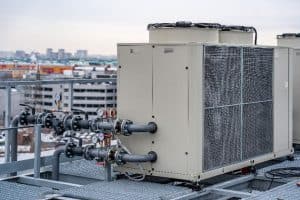 Summer is coming to the Northern Hemisphere, which means hospitals and universities will soon be gearing up their comfort cooling systems for use. While it is standard for these institutions to have backup pumps for chillers and closed loop systems, it is also common for these pumps to develop corrosion problems during the offline phase. Cortec® offers relief from these corrosion complications with two water treatments that contain Vapor phase Corrosion Inhibitors.
Pros and Cons of Pump Redundancy
Hospitals especially—but also universities—need to have redundant systems to make sure operations continue in the case of emergency. If one pump fails, a backup pump will ensure the chiller or closed loop keeps operating with little to no change noticed by the people inside the facility. Unfortunately, the offline period is an extremely vulnerable time for pumps because they are not exposed to their normal corrosion inhibiting water treatment when no water is flowing through. To counter potential surprises and make sure the backup pumps stay in good condition, facilities often alternate between pumps every week or two. However, corrosion can still happen in this short layup period, introducing a slug of corrosion products into the piping when the pump is turned on. This can cause clogging and other complications for a less than smooth startup.
The Cortec® Corrosion Inhibitor Advantage
One advantage of Cortec® closed loop water treatments is that they protect in multiple phases. Not only do they dissolve in water to fight corrosion on surfaces in direct contact with the circulating stream, but they also work in the vapor-phase, protecting metal surfaces above the water level. This vaporphase action is exactly what is needed for pumps and piping that are periodically emptied but may contain residual water. Even if the system is complex or empty, Vapor phase Corrosion Inhibitors are able to protect in areas that contact-only corrosion inhibitors cannot reach.
Layup of Chiller Pumps on Standby
VpCI®-649 is a Cortec® water treatment recommended for protection of chiller pumps. It should be added to the closed loop / chiller water and circulated through the system before the pumps are shut down, leaving behind a corrosion inhibiting film that protects multi-metals above and below the waterline. Dosage is dependent on the length of protection needed—a smaller dose during operation and an incrementally larger dose for longer periods of layup (up to two years). There is typically no need to flush the inhibitor out before bringing the pump back online, making the transition even more seamless than simply having a lower chance of corrosion complications. VpCI®-649 comes with a molybdate tracer for easy detection but is also available with a PTSA tracer for those with molybdate restrictions.
For pumps used with HVAC closed loops that reach temperatures of up to 302 °F (150 °C), Cortec® recommends using M-640 L, which also contains contact and Vapor phase Corrosion Inhibitors. It is an excellent replacement for silicates and phosphate/nitrite-based compounds and protects yellow and ferrous metals. It can be used in closed loops during operation or layup, allowing great flexibility for maintenance personnel or water treatment service providers.
Don’t Sweat It This Summer
Summer is hot, which is why hospitals and universities use comfort cooling systems in the first place. But there is no need to increase the extra heat and sweat of stress from trying to undo a corrosion problem on chiller pumps. Traditional corrosion inhibitors fall short of the goal, but Cortec® Vapor phase Corrosion Inhibitors easily achieve the void space protection needed so offline pumps can be ready to start at a moment’s notice. Contact Cortec® to learn about making life easier for your facility maintenance team this summer: https://www.cortecwatertreatment.com/contact-us/
Keywords: avoid corrosion, backup chiller pumps, corrosion in chiller pumps, pump redundancy, corrosion inhibitors, hospital cooling systems, university cooling systems, comfort cooling systems, Cortec, pump corrosion
Need a High-Resolution Photo? Please Visit: www.cortecadvertising.com
For a PDF version please click here.