
NEWS ALERT: Is Your Coating a Good Match for Corrosive Chemicals?

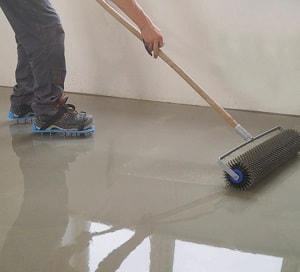
If you are a facility or maintenance manager, you probably know the importance of a good epoxy coating to protect surfaces from chemical attack and abrasion. The right coating can mean the difference between a concrete floor that lasts for decades and one that starts to disintegrate and corrode shortly after a chemical spill. It is therefore critical to ask if the coating you are considering has what it takes to resist the substances to which it will be exposed. Our “MCI®-2026 Floor Coating Chemical Resistance Guide” makes that easy when looking at the Cortec® option.

MCI®-2026 is a 100% solids, 2-component novolac epoxy coating designed for areas that need high chemical or abrasion resistance. It can be used on concrete floors, on concrete counters, and even on metal tanks (when used with MCI®-2026 Concrete Primer WB). Possible applications include chemical processing plants, manufacturing plants, or just about any industrial facility that gets heavy traffic or is at risk for chemical spills. Since MCI®-2026 meets all USDA/FDA guidelines for use in federally inspected facilities, it is also a good option for coating floors in commercial kitchens and at food processing sites.

Anyone interested in using MCI®-2026 can check the “MCI®-2026 Floor Coating Chemical Resistance Guide” to see if MCI®-2026 is a good match for the substances it is likely to encounter in their facility. This list is sorted by the following categories:

• Organic acids
• Inorganic acids
• Chlorinated solvents
• Aromatic and aliphatic solvents
• Alcohols
• Ketone esters
• Alkalis and salts
• Miscellaneous
• Oils

With almost all 100+ chemicals on the list falling in the range of fair to excellent resistance (most in the excellent category), this guide reflects the tough makeup of MCI®-2026 for chemical processors or other manufacturers. For those considering using MCI®-2026 in commercial food processing facilities, the list even includes resistance ratings for several food substances such as mayonnaise, milk, mustard, peanut butter, and vinegar that could easily fall on the floor!

Chemical resistance is an important part of many concrete and metal coatings applications. Simplify your search for the right epoxy coating by starting with this guide on MCI®-2026 chemical resistance! https://www.cortecmci.com/product/mci-2026-floor-coating/

Keywords: coating for chemicals, floor coating, concrete coating, metal tank coating, heavy traffic coating, coating for chemical spills, chemical resistance rating, epoxy coating, Cortec, MCI

For a PDF version please click here.

NEWS ALERT: Engine Oil Additive for Corrosion Protection During Testing, Transit, and Storage

Are you an engine manufacturer who needs to inhibit corrosion during testing or shipping? Do you own heavy equipment that needs to idle during the winter months? Is storing critical spare engines an integral part of your backup plan? If the answer to any of these questions is yes, VpCI®– 329 may be your path to improved corrosion protection during testing, transit, and storage.

Contact and Vapor Phase Protection
VpCI
®-329 offers dual corrosion protection (1) by forming a tenacious film that clings to metal surfaces and (2) by introducing Vapor phase Corrosion Inhibitors that protect in void spaces above the engine oil. This mechanism provides more comprehensive protection than standard inhibitors that only protect in direct contact with the treated oil. As a result, the system does not need to be completely filled with oil to ensure protection. VpCI®-329 can be added directly to oil additives or fogged into other compartments within the engine.
Emergency Replacement for Engine Testing
In 2021, when one company suddenly found themselves without their normal supply of corrosion-inhibiting oil additive for engine testing, they turned to Cortec
® for an emergency replacement. Fortunately, the end user had tested the rust preventative properties of VpCI®-329 (a similar product) several years earlier, so it was easy to proceed with viscosity and compatibility testing in order to make an almost seamless transition to VpCI®-329 custom-blended with their engine oil. The prediluted version is now added to engines before testing and is drained out thereafter.

Shipping and Storage
In addition to using VpCI
®-329 during the testing phase, engine makers or owners can also add it to their lubricant systems for corrosion protection during shipping or storage. The fact that VpCI®– 329 offers corrosion protection in the vapor phase is a great advantage for shipping, because it is undesirable to fill a system completely with hazardous fluids that could jostle around and spill. Instead, VpCI®-329 can be added to a small amount of engine oil and circulated prior to shipping, leaving the lubricant system fully protected. Once in the field, if the engines themselves or the vehicles in which they are installed need to be temporarily idled or stored as critical spares, VpCI®-329 can again be added to the oil system for interim corrosion protection.

Get Started with VpCI®-329
The best dosage and dilution of VpCI
®-329 will vary from case to case, so be sure to contact Cortec® to test compatibility and get custom recommendations prior to implementing your next corrosion inhibiting oil additive! Contact Cortec® today: https://www.cortecvci.com/contact-us/

Keywords: engine oil, corrosion protection, oil additive, engine testing, corrosion protection during transit, corrosion inhibitors, Cortec, VpCI, critical spares, rust preventative

For a PDF version please click here.

NEWS ALERT: Best Practices for Cooling Tower Startup This Spring: Biofilm Removal

Spring is almost here for half of the globe, which means it is almost time to start up those comfort cooling systems in hospitals, universities, offices, and shopping malls! Although many who service HVAC systems and cooling towers probably already know the importance of removing biofilm at this time, sometimes it is good to get some quick reminders and recommendations on why and how to get a clean start each spring!

Time for a Clean Start
During the winter season, many cooling towers are shut down and drained. Unfortunately, any residual dampness can be a perfect breeding ground for bacteria and biofilm (a.k.a. slime). Biofilm can cause minor to serious problems by encouraging corrosion, reducing heat exchange efficiency (more so than scale!), and harboring insidious bacteria such as Legionella. All these are very good reasons to get rid of biofilm. However, because biofilm clings to surfaces and makes it difficult for biocides to even access and destroy the bacteria, it is important to first apply a bio dispersant like 
BioClean 612™ that leads the way to a clean start for cooling tower operation.

Three Steps to Biofilm Removal with BioClean 612™
BioClean 612™ is a powerful aliphatic amide based organic penetrating agent and organic deposit dispersant that works in synergy with biocides. BioClean 612™ penetrates biofilms, lifts them off the internal surface of the cooling tower, and keeps them dispersed so biocides can have free access to them. There are three basic steps to the process once the cooling tower has been refilled and the circulating pumps turned on:

1. Add BioClean 612™ to the tower and circulate for 30-45 minutes to loosen the biofilm off the surface.
2. Add biocide of choice to kill the bacteria and turn the biofilm into dead siltlike matter.
3. Filter the biofilm residue out of the system.

Enjoy the Benefits of Biofilm Cleaning
Following biofilm removal best practices is a winning strategy from many angles. Not only does it minimize the health risks of breeding and harboring bacteria; it also maximizes heat exchange efficiency, reduces the corrosiveness of the environment, and gives the standard water treatment program better access to metal surfaces for corrosion protection and antiscalant purposes. Get off to a good start this spring by ordering your bio dispersant now: 
https://www.cortecwatertreatment.com/contact-us/

Keywords: biofilm removal, cooling tower startup, best practices for cooling tower startup, biofilm in cooling towers, bio dispersant, HVAC startup, HVAC best practices, avoid Legionella, corrosion protection, Cortec

For a PDF version please click here.

VpCI®-325 CC – New EU Version Available from CorteCros®!

The EU directive regarding REACH and the registration of chemical substances from outside Europe, along with the shortage of raw materials caused by the war in Ukraine, prompted CorteCros® to start researching and substituting local raw material readily available to them. In doing so, CorteCros® found a suitable alternative directly in Croatia to replace the raw material carrier found in Cortec’s VpCI®-325 rust preventative. A test batch of VpCI®-325 CC was produced using the new carrier, and samples were sent to the Cortec® World Headquarters laboratory in Saint Paul, Minnesota, for testing.

Evaluation Process

VpCI®-325 CC was compared with regular VpCI®-325 and evaluated according to these standards:

  • Product specification must be similar to the existing version of VpCI®-325
  • Humidity chamber performance must be similar to the existing version of VpCI®-325

Evaluating VpCI®-325 CC


Test

Specifications for VpCI®-325 Results for VpCI®-325 CC
Visual Tan to light brown slightly viscous liquid Yellow, slightly viscous liquid
Density 6.8-7.0 lbs./gal (0.8 kg/L) 6.94 lbs./gal (0.8 kg/L)
Non-Volatile Content (Tested for 20 min. at 248 °F [120 °C]) 33.0-42.0% 36.5%

Humidity Testing (ASTM D1748)

Steel Panels Coated with VpCI®-325 and VpCI®-325 CC

eel Panels Coated with VpCI®-325 and VpCI®-325 CC

Photo after 5712 hours of humidity testing.

Based on the results presented above, it was concluded that VpCI®-325 CC fully meets the required properties for corrosion protection. VpCI®-325 CC has a more prominent yellow hue than regular VpCI®-325, but there is no change in the inhibitor package and protection is comparable.

The CorteCros® production and sales team are now making efforts to familiarize customers with the new product, which—judging by preliminary responses—will soon find its place on the EU market!

Contact CorteCros® to learn more about this innovative response to raw material challenges: https://cortecros.com/contact/

Keywords: VpCI-325, REACH alternatives, corrosion protection, rust preventative, CorteCros, humidity testing, Cortec World Headquarters, registration of chemicals in EU, accelerated weather testing, raw material shortage